Thursday, February 4, 2021

Let's Get Real


Ivan Kramskoi (Russian, 1837-87), Portrait of an Unknown Woman, 1883, o/c

So, here is a work by the Russian painter Ivan Kramskoi. The woman he depicts against a St. Petersburg palace has sensuous lips, hazy eyes, thick curved eyebrows.  If you look closely she also has skin imperfections, freckles, maybe a pimple on her nose.  She's not so much beautiful as impressive and 'chic,' dressed in the latest fashion of the time.  Demi-monde fashion to be exact.  Not without reason critics at the time called her "the courtesan in a carriage," and "an offspring of big cities." And these assessments must have pleased Kramskoi because it was his full intention to bring a real life prostitute, as she really looked, onto the canvas.

Does she in any way remind you of this woman, another, ah hem, odalisque?

Jean-Auguste-Dominique Ingres (French, 1780-1867), La Grande Olalisque, 1814, o/c

The artist here has made his courtesan or prostitute acceptable by portraying her as an exotic from the Far East.  He has also turned her into a statue of sorts with flawlessly unrealistic skin, and a body that is too long and lacks all signs of joints. Essentially, he has purified her and brought her out of private male salons into the public.  

The 'he' in this case is Dominque Ingres, a French neo-classical painter who was so influential in Paris, Rome and later Russia, that he could do whatever he wanted. The St.Petersburg Academy of Arts embraced him whole-heartedly sending some of its most notable painters abroad to France and Italy to learn his "statuesque" style.  Those who didn't go abroad were taught their art by studying and copying the Academy's sizeable collection of neo-classical artworks.

This until Kramskoi and some of his young fellow students challenged the Academy, asserting their freedom to paint realistically.  Unable to effect Academic changes and led by Kramskoi, they publically  broke with (and/or were expelled from) the Academy and began their own movement which became known as peredvizhniki or itinerants. Classically trained but now dedicated to portraying real life and bringing art to the people, they organized their own exhibitions, traveling from town to town across Russia.  

In the process, men went from looking like this: (Ingres, Male Torso, 1800)
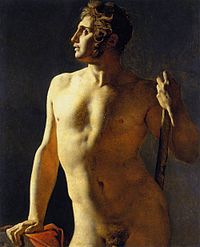
to looking more like this 1867 Self-Portrait by Ivan Kramskoi.


Gradually Kramskoi's aspirations to portray the true expressiveness and real circumstances his images took hold with folowing generations of Russian artists. By the end of the 1800's portrait subjects were being painted with personalities and complex human emotions, and our 'unknown woman' and her ilk were out of their carriages and seen on the walls of Russian galleries, museums, dachas and some of those St. Petersburg palaces.


Wednesday, February 3, 2021

Considering Dessert


So the pandemic seems to be having an effect on my taste buds.  Never one for desserts (unless it is ice cream or pecan pie), I find myself eying the local bakery shelves more carefully these days.  And thinking of some lucious looking art -like these galettes Claude Monet has captured with golden perfection. 

Claude Monet, Les Galettes, 1882, 25.5" x 31.8", o/c

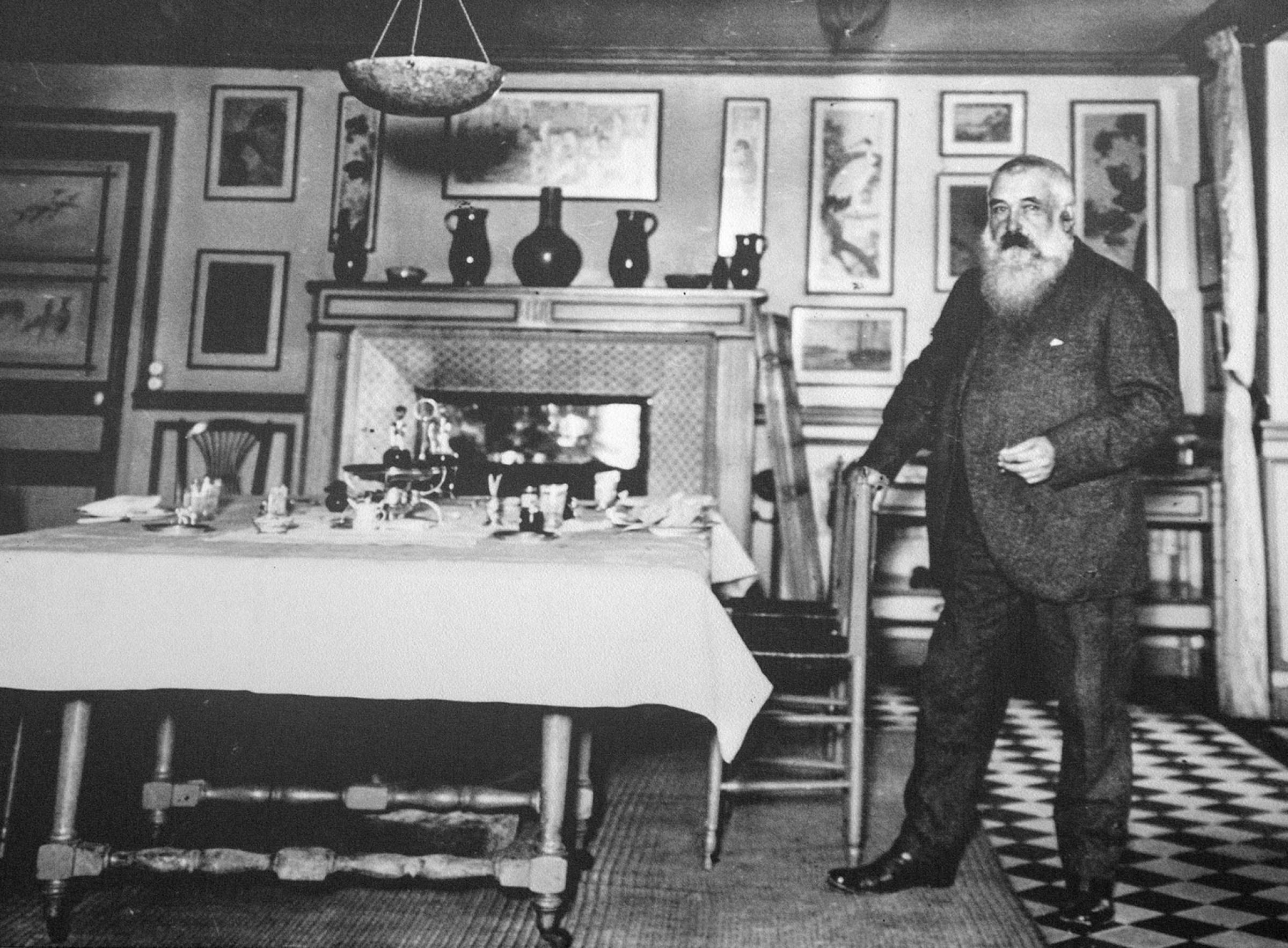
Most people know Monet was a painting genius as well as a master gardener, but they might not know that his third great obsession was food.  He was also an Anglophile who loved fast cars, tweeds, tea and certain English recipes from fine restaurants.  He brought those last back to Giverny where he worked with his private cook until the taste was exactly the same he remembered.  He also carried vegetable seeds home in his pockets from locales where they had tasted especially delicious and was the first to plant zucchini in Normandy - which until then grew none.

Monet in his yellow Giverny dining room with some of his extensive collection of Japanese prints on the walls

Or if I'm feeling a bit too pensive for pretty galette, perhaps I'll dim the lights, pour myself a glass of sherry and settle in with some grapes and cake.  Like the dessert Raphaelle Peale painted so exquisitely below.

Raphaelle Peale, Still Life with Cake, 1818, o/c, 10.7" x 15.2"  (Metropolitan Museum of Art)

The first really distinguished still life specialist to emerge in this country, Peale struggled with lifelong melancholy.  Even his tightly grouped, spare, softly lit paintings are delicately permeated with it. Like his siblings (almost all of whom were named after famous artists or scientists), Raphaelle was trained as an artist by his artist/inventor/scientist/naturalist/and more father, Charles Willson Peale. By his early 30's he had begun suffering from the effects of arsenic and mercury poisoning brought on by working as a taxidermist in his father's museum.  In deterioriating health and frequently hospitalized after that, he died in his early 50's.  The paintings he left behind are exquisite.  Of all the many masterpieces in his exceptional collection,  the painting John D. Rockefeller, 3rd. kept close at his desk was Raphaelle Peale's Blackberries.

Blackberries, ca.1813, o/c,  7 1/4" x 10 1/4" (De Young Museum, San Francisco)

Or, Maybe one of these days I will decide to really dive in to those desserts I keep walking by.  And maybe that day I'll be tempted to buy all the cakes because they'll all look as sumptuous as Wayne Thiebaud's astonishing artistic odes to dessert.  Hopefully I'll remember they are as loaded with calories as Thiebaud's works are loaded with historic references to past techniques and artists like Morandi, Matisse (💗), Ingres (from yesterday's CIWT), Bonnard, Albers.  After 60 years of daily painting (he turned 100 this year) those artists and his own "American drive' have inspired him to keep exploring the perfect formal recipe for painting a dessert in a way that it has never been painted before.

Wayne Thiebaud, Cakes, 1963, o/c, 5' x 6'

Sunday, January 31, 2021

String!


So, I thought I'd take a quick look at the history of fabric and clothes, then report.  

That turned out like taking a quick glance at the entire worldwide history of art.  In other words, it includes virtually everything.  First off,  everyone was naked for who knows how many tens of thousands of years or whether they had become humans yet.  Along the long, long way, discoveries were made or invented at different times in different parts of the world depending on myriad circumstances.

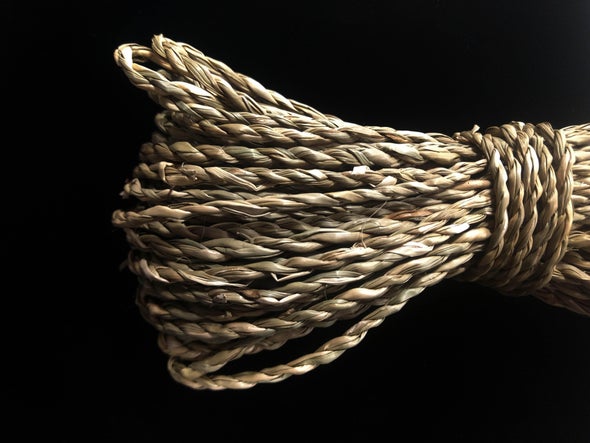
The more I researched, the happier I am (and you too!) that I wasn't one of our (pre) people ancestors. For instance, there's not a chance that I would have pulled fibers from the inside of tree bark and begun rolling and rolling them on my thigh.  And then! after weeks of rolling when I had enough strands, no way would I have thought to twist them around each other until I'd created string.  So, with me in charge there wouldn't have been fishing lines and nets, bows for hunting and creating fire, bags to wrap and carry bundles, straps to carry babies close to the chest and so much more that our civilization relied on.  Oh, and clothes!   

And the blue in those jeans we all - worldwide -  have multiple pairs of and wear for everything from work to fashion?  You can't imagine how much artifice and effort it took to produce that indigo dye from certain types of green plant leaves.  Once that stable pigment was figured out, it was terrific for ink or paint.  But getting it to adhere to cloth, well that was cave person rocket science.  Then there's all the, you know, factories, trading routes, money and banking and other things that needed to be invented before we could all step into our daily jeans.

The other day I was writing about Super Kids as if they are something new.  But, come to think of it, our ancestors were the original Super Kids.  They may have been 'primitive,' but boy were they smart, resourceful and creative.

Thursday, January 21, 2021

First Lady's Choice


Robert Seldon Duncanson (1821-1872), Landscape with Rainbow, 1859, 30 x 52.25", oil on canvas


I didn't catch this pastoral landscape on WSJ Live on Inauguration Day, but perhaps some of you watching on television did.  It had been selected by Jill Biden from the Smithsonian Collection to be on prominent display in the U.S. Capital during the inauguration.

The artist, Robert Seldon Duncanson, was one of very few established African-American artists active during the pre-and post-Civil War era.  'Established' meaning he was able to support himself by his art, even to travel to and receive art training in Paris.  These accomplishments are never easy for any artist; Duncanson was extremely gifted but he also worked tirelessly first as a house painter, then as an itinerant portrait painter particularly around Cincinnati and Detroit.  There was little formal art education for most Americans at the time and virutally none for African-American artists, so he taught himself to paint by copying prints and etchings of European artists and sketching from nature as he traveled seeking portrait commissions.  

He also became intrigued by travel prints, exploration journals and how Hudson River School artists whose works he encountered used nature to convey ideas about America and its ideals. With the goal of becoming a landscape artist himself, he came off the road, away from portraits and settled in Cincinnati, which had a large free slave population as well as a strong arts community.  There, in what was then called 'the Athens of the West' and filled with new inspiration, he received an important commission from Charles Avery, an abolitionist Methodist minister.  His work for Avery, combined with Avery's social reach,  cemented Duncanson's career by establishing him within a network of abolitionist patrons who purchased his art, sponsored his trips to study old masters abroad and sustained most of Duncanson's career.

Sadly, that career was shortened by dementia and early death at 51.  It is thought Duncanson's suffering, like perhaps Michaelangelo, Goya, Van Gogh among others, was caused by lead in the paints.  Even by then though he was one of the very few landscape painters of the nineteenth century and achieved levels of success unknown to his contemporaries.  By the 1860's American art critics were proclaiming  Duncanson the "greatest landscape painter in the West" while London newspapers held him in equal regard to other British artists at the time.  He is credited with developing the regional Ohio River Valley art style and to this day the Taft Museum of Art in Cincinnati maintains an artist-in-residence program for African-American artists in honor of Duncanson.

So, the First Lady chose very well indeed.  


Thursday, January 14, 2021

How'd You do That?


Here it is a little closer: 


It's at the highest point of the Church of Sant'Ignazio in Rome, near the Pantheon.  And....it isn't a dome at all. Ie, the ceiling up there is flat.

Backtracking a bit, I was thinking about those high church ceilings and wondering how artists got up there to decorate them. Many of us, particularly those who read Irving Stone's The Agony and the Ecstacy or saw the movie, know Michaelangelo worked from scaffolding to paint the Sistine Chapel ceiling.  He actually designed a unique system of platforms attached by brackets to the Chapel's walls.  This was ingenius (of course), but he never did figure out a way to overcome the physical strain of the increasingly uncomfortable work. Definitely not by lying on his back to paint.  Contrary to the movie image of Charlton Heston, he and his assistants stood and reached above their heads to paint, for years!  Makes my muscles ache just thinking about it.

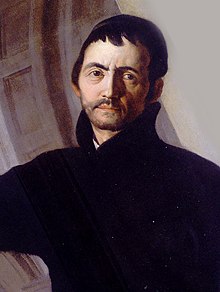
So far I haven't learned how other artists before the advent of modern technology went about painting those gorgeous vaulted and domed ceilings around the world.  But I did learn about the false dome above which was a major accomplishment in its own right and executed by another Renaissance genius, Brother Andrea Pozzo (1642-1709).

Pozzo may have been a Brother in the Jesuit order, but he appears to be the Father of the illusionistic artistic technique called trompe d'oeil.  The widely traveled virtuoso painter-priest was an expert in mathematics who wrote detailed treatises on theories of perspective. And, when he was put in charge of the interior decoration at Sant'Ignazio from 1685-94, he had a supreme opportunity to put his theories into practice.

The Catholic Church at the time was in the business of winning believers back from the new Protestant orders that had sprung up since Martin Luther.  One of their main techniques was filling their churches with dazzling, theatrical art that stirred the hearts and astonished the minds of worshippers.  So, the original plan for the new Sant'Ignazio church called for an impressive, soaring dome through which the light of the Lord would appear to stream.  

But, some time before completion, either the church ran out of money or the locals objected to a massive dome that would block their sun.  Enter Brother Pozzo who managed to make the bascilica's massive (and flat!) ceiling disappear, opening up an entirely convincing vista into the celestial world above.  What he was standing or sitting or lying on, I don't  know, but, however he did it,  Pozzo's masterpiece is one of the most impressive pieces of artistic illusion ever painted.

Brother Andrea Pozzo, S.J., Self-Portrait, 17th C.

Monday, September 14, 2020

Nothin' But Grey Skies


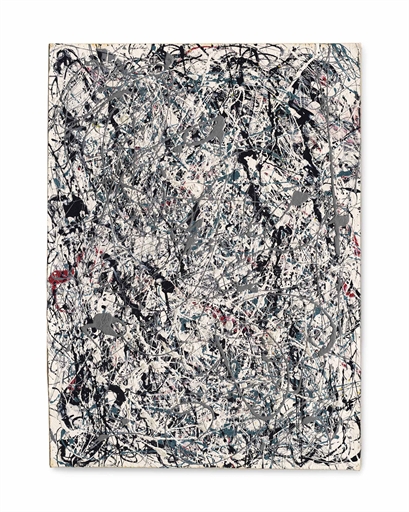
Jackson Pollock (1912-1956) , Number 19, 1954, 30 7/8" x 22 5/8," Paint dripped on canvas.


Our smoky San Francisco skies these days put me in mind of Jackson Pollock's drip paintings. The one above is actually a bit unusual because he signed it upper left as a vertical and it is more 'conveniently' sized than his enormous, wall sized canvases.  But, in May 2013, those things didn't stop someone from buying Number 19 for $58,363,750 at a Christie's auction.

Pollock was famous in his lifetime especially during his legendary burst of creativity from 1947 - 1951 when he had several gallery shows and countless magazine articles written about him.  Fame though  did not equate with agreement among critics and the general public about the quality of his art. Time dubbed  him "Jack the Dripper" while the preeminent critic of the era, Clement Greenberg, championed Pollock so actively he actually organized his first gallery show (which of course got rave reviews).  The wide variety in people's opinions about his art continues to this day and I'm guessing you already have your own, if you've thought of Pollock at all.

Far be it from me to try to change those. But, if you were here, I'm betting we'd agree Pollock's Number 19 is a pretty good likeness of the West Coast sky these days

Saturday, September 5, 2020

Water Lilies, Of Course


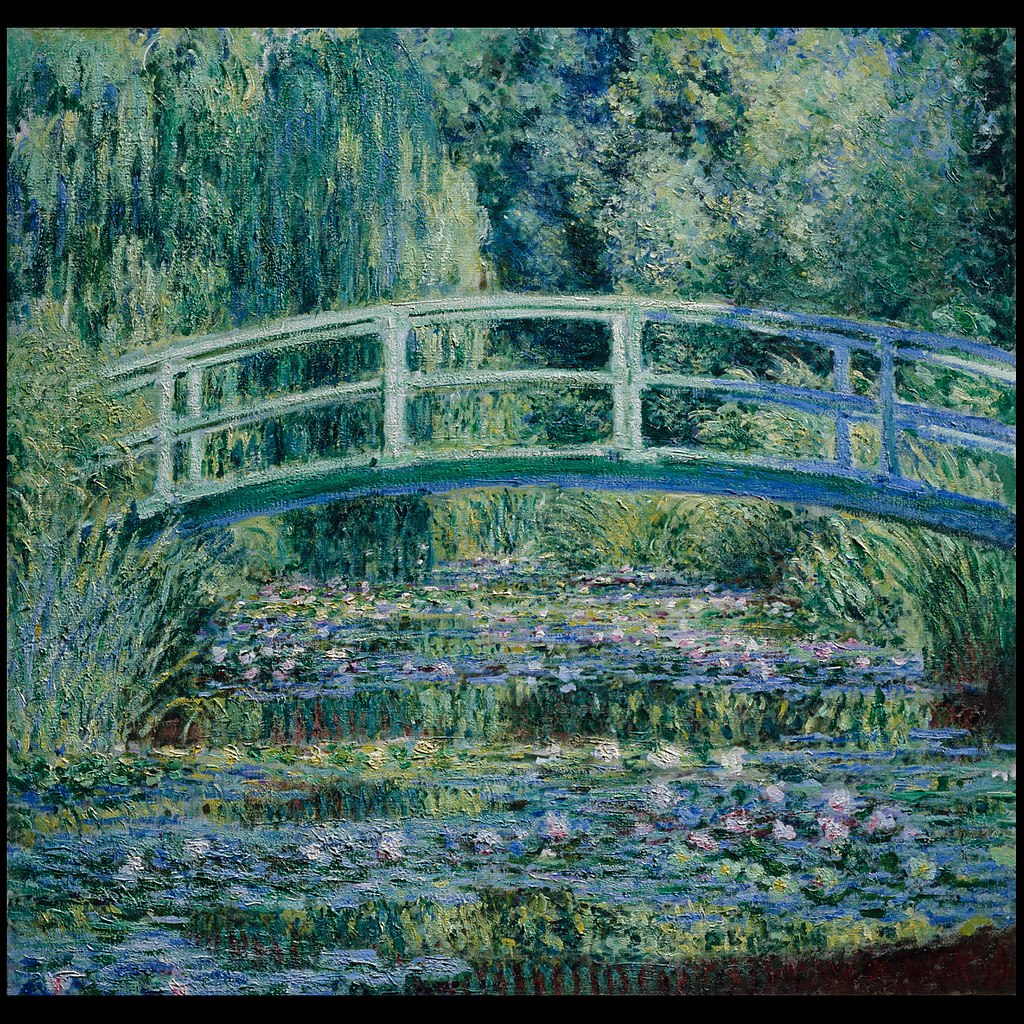
Water Lilies and Japanese Bridge, 1899

One can't talk about Monet without talking about his 250 Water Lily paintings which depicted the flowers and surroundings of his home in Giverny.  These paintings and the gardens themselves were the primary focus of the last 30 years of his life.  He loved them both, and once said, "Aside from painting and gardening, I am good for nothing."  He also felt he was a better gardener than he was a painter - which is saying a lot!

It is lucky Monet found painting (and selling) the lilies "an extension of my life" because they were also a huge extension of his budget.  He employed six full time gardeners, one of whose daily assignment was to dust and de-pollenate the pads and water so that the colorful light they reflected was pure.  And he actually had a branch of the Epte river diverted to his property to fill his lily pond.  This was much to the objections of his neighbors who were almost successful in preventing one of the most beautiful gardens and series of paintings ever created.

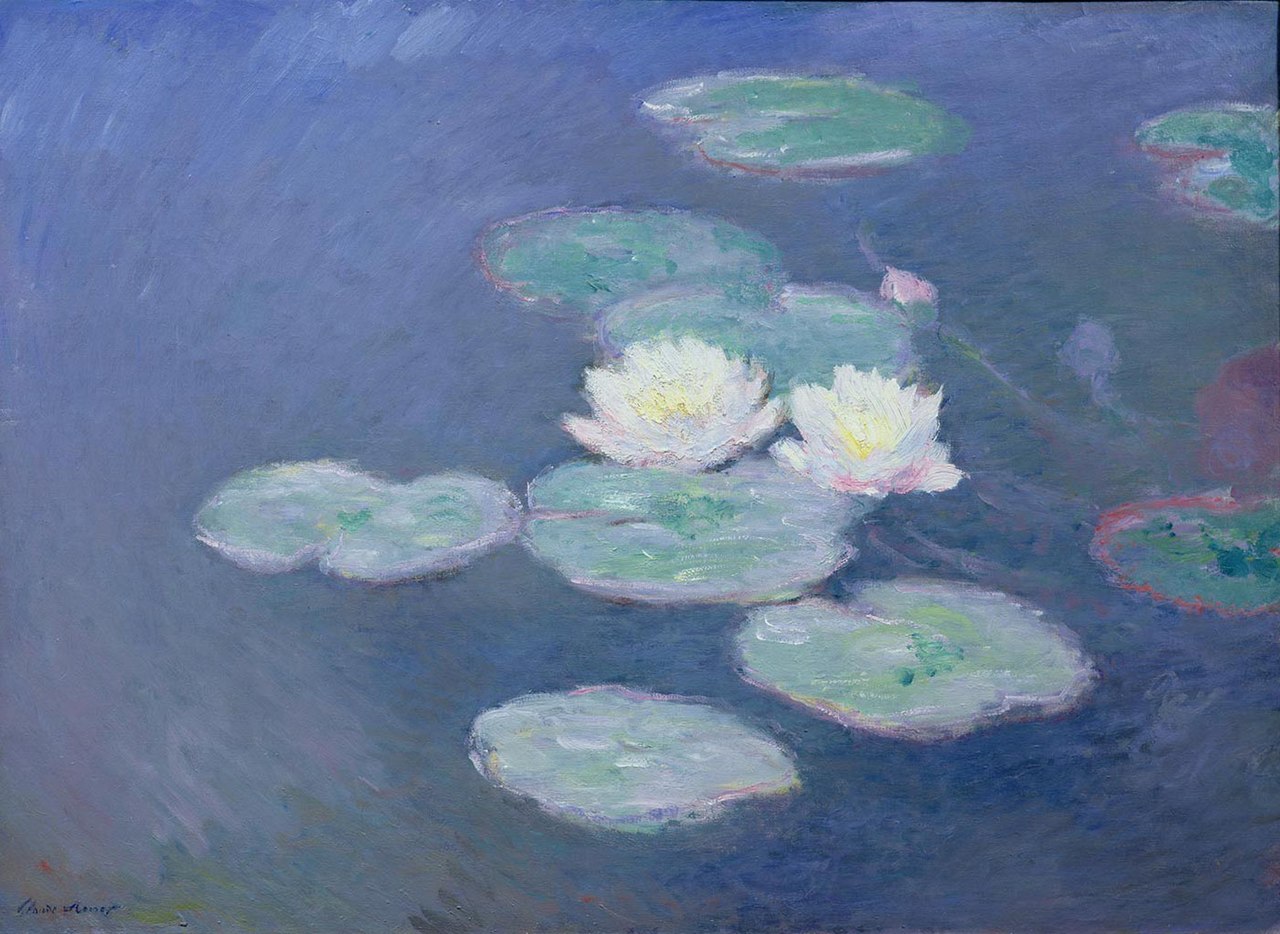
The paintings were  beautiful, life like, refined, sparklng, serene:

Water Lilies in the Evening, 1896


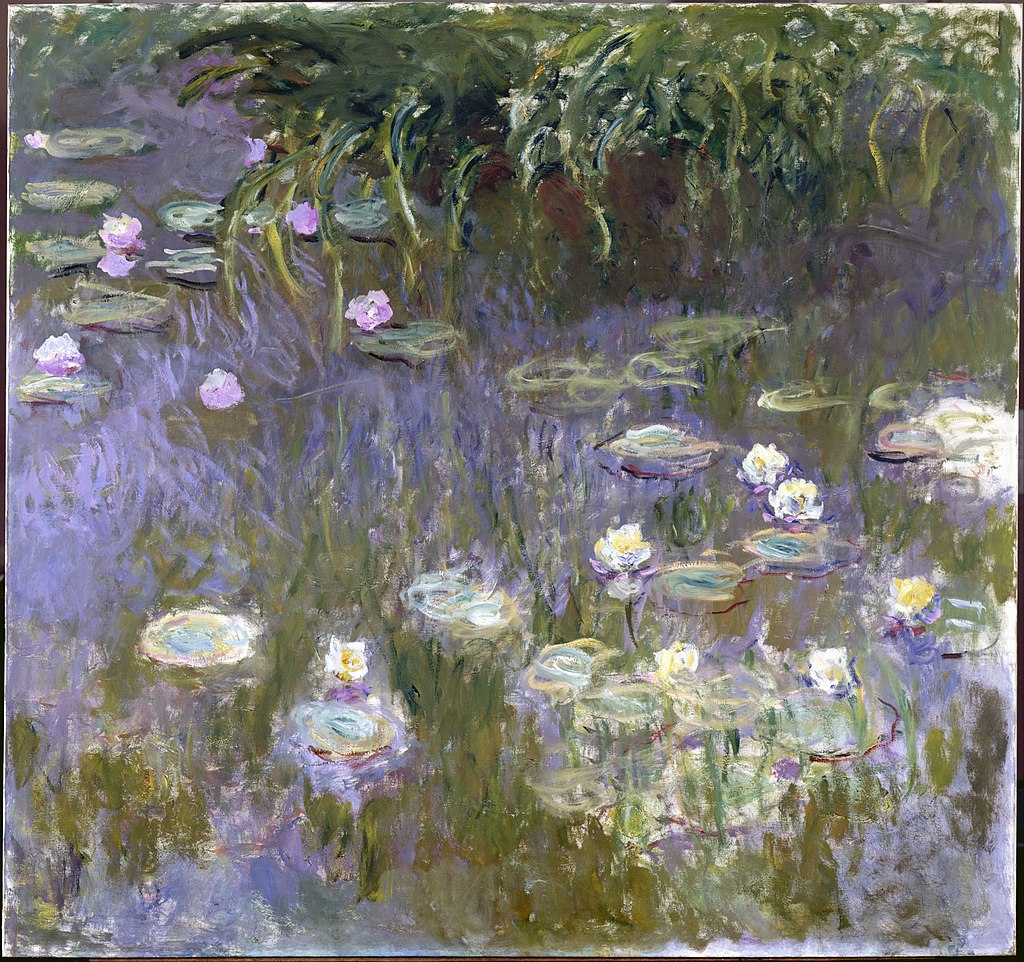
Until they became fragmented, garishly colored and, in my estimation  just kind of weren't.

Water Lilies, 1922

The reason for the change was cataracts.  Monet began having visual problems as a result of them around 1912 and his palette became gloomier, murkier and less refined.

Japanese Footbridge, 1922


I consider Monet's last years sad because I feels he was.  Sad, lonely without his wife and son, depressed, in pain,  possibly a bit demented and, in spite of a long overdue operation, losing the greated gift he was graced with: his special eye sight.   But there are others who don't see it this way at all. Many of them love the later water lily paintings and some see them as early abstract art.  Oh well, such are the different viewpoints of the art world.   

And really the last word belongs to Claude Monet: Everyone discusses my art and pretends to understand, as if it were necessary to understand, when it is simply necessary to love.